Three developments from the past week matter for anyone heading to the Pacific coast. According to The Tico Times, unusually high king tides peaked on the Pacific coast before dawn on Thursday, Nov. 26, and are expected to keep returning through Saturday, Nov. 28, with Bahía Herradura, home to Los Sueños, among the spots forecast to see water above 3 meters. The same outlet reports that Costa Rica is on track to finish 2026 with about 3.05 million international visitors, still below the 2019 record, as weekly flights to the country have dropped. And the U.S. dollar set its third record low in a week against the colón on Nov. 19, which changes how far dollars go on the ground.
King tides on the Pacific coast through Saturday
The Tico Times reported on Nov. 26 that king tides peaked on the Pacific coast in the early hours of Thursday and will come back with each early-morning and afternoon high tide until Nov. 28. The forecast comes from MIO-CIMAR, the University of Costa Rica's oceanographic information unit, which put the highest water between 2 a.m. and 4 a.m. on Thursday.
Forecast peak heights by location, according to the report:
- Golfito: 3.48 meters (11.4 feet), the highest on the coast
- Puntarenas, Bahía Herradura, Uvita and Bahía Culebra: 3.08 meters (10.1 feet) each
- Gulf of Santa Elena: 3.05 meters (10 feet)
- Quepos: 2.87 meters (9.4 feet)
The paper explains that two things are adding together. The full moon on Tuesday produced the strongest tides of the lunar cycle, and El Niño has warmed the Pacific. Warmer water expands, which raises average sea level. MIO-CIMAR oceanographer Rodney Mora warned that the conditions can bring flooding and coastal erosion, mainly in low-lying neighborhoods. During the last episode, from Oct. 26 to 31, homes in Puntarenas flooded and the National Emergency Commission confirmed damage at Playa Zancudo and Playa Preciosa.
For boaters and beachgoers, MIO-CIMAR said the tides alone do not make conditions generally unsafe for swimming or navigation. The report does advise visitors to keep cars off the sand and away from estuary mouths, and to expect much less beach at high tide. The Caribbean coast is not affected. Pacific tides should return to their normal range on Sunday, Nov. 29, and MIO-CIMAR updates its forecast every six hours.
2026 visitor numbers on track to fall short of the 2019 record
According to The Tico Times on Nov. 26, the Center for Tourism Studies (CET) projects that Costa Rica will receive about 3.05 million international visitors in 2026. That would be 3.6% more than last year but still below the 3.14 million who came in 2019. The CET's scenarios range from 3.03 million to 3.08 million.
Nearly all of the year's growth came early. First-quarter arrivals reached 1,033,777, up 11.3% and above the 2019 level for that period for the first time. Arrivals from April through October totaled 1,420,553, almost the same as a year earlier. October brought 144,010 visitors, down 1.1%. That was the third monthly drop in a row, after declines of 5.1% in August and 2.4% in September, according to ICT figures cited in the report. Canatur executive director Shirley Calvo said the strong first quarter accounts for most of the year's gain.
Air service has thinned as well. The CET counted 523 weekly flights to Costa Rica in the third week of November, compared with 609 a year earlier, and 82 routes compared with 90. All 14 routes that were dropped served Juan Santamaría International Airport near San José, which now has 94 fewer weekly flights. Liberia gained eight. CET director Víctor Umaña said airlines move aircraft based on cost and demand, and price-sensitive San José routes are cut first. For travelers flying into the capital, the main airport for the Central Pacific, that means fewer flights to choose from this high season. The high season runs through early April, and November arrival figures are expected next month.
Dollar sets third record low against the colón in a week
The Tico Times reported on Nov. 20 that the U.S. dollar hit another all-time low against the colón on Thursday, Nov. 19. It closed at a weighted average of 444.45 colones on Monex, the Central Bank's foreign exchange market. That was the third record in a week, after 444.85 on Wednesday and 446.10 on Nov. 13. The Central Bank's reference rates for Nov. 20 were 442.31 colones to buy and 446.48 to sell, though bank windows set their own rates.
The dollar started 2026 at 497.07 colones, so it has lost 10.6% of its value this year. It is now 36% below its June 2022 peak of 696.76. The paper gives an example: $2,000 converts to about 888,900 colones at the new rate, compared with roughly 994,100 at the start of the year.
The 2026 State of the Nation report, released at the same time, names an oversupply of dollars as the main driver since 2023. The Tico Times notes that seasonal factors add pressure in November and December, including high-season tourism and companies converting dollars for year-end bonuses and taxes. Projections gathered in September put the year-end rate between 440 and 465 colones. In practice, visitors who pay local costs in colones are getting fewer colones per dollar than earlier in the year, so it is worth checking the current rate before exchanging money or comparing prices quoted in each currency.
To see what's happening on the water off Los Sueños, check our latest fishing reports or contact us to plan your trip.
Sources
- King Tides Peak on Costa Rica's Pacific Coast and Run Through Saturday — The Tico Times, November 26, 2026
- Costa Rica Will End 2026 Short of Its 2019 Visitor Record, Forecast Shows — The Tico Times, November 26, 2026
- Dollar Hits Its Third Record Low in a Week in Costa Rica — The Tico Times, November 20, 2026
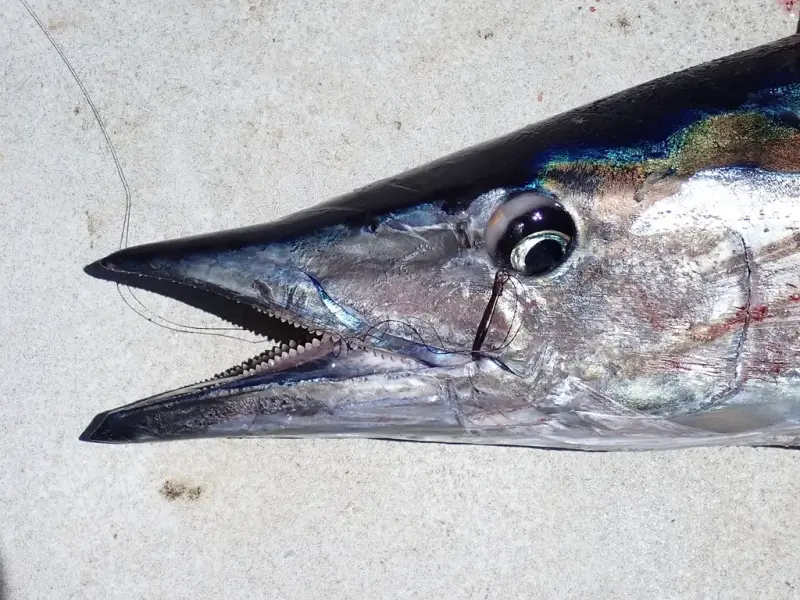
Photo from our gallery (wahoo); illustrative, not a photo of this story.